


In a divided country, brands looked to the past for ways to pull consumers together and to their products.
by Duane Bonifer
COLUMBIA, KY. (02/09/2026) Americans might be deeply divided over cultural, political and social issues, but advertisers think nostalgia might be an ingredient that can help pull people together. Or at least get them to agree to enjoy the same potato chip.
That’s the assessment of a Lindsey Wilson University business professor, who studied the dozens of television commercials that aired during Super Bowl LX on Sunday, Feb. 8.
“I think the theme of this year’s best Super Bowl ads was nostalgia,” said Lindsey WIlson business professor JC Phelps. “We live in a time with a lot of political tension and a lot of uncertainty. People are kind of fatigued, and so nostalgia is something we can all look to to bring joy, to bring us together.”
Phelps used his observations to lead a Monday morning discussion in his “Content Creation” marketing class, helping his Lindsey Wilson students understand the power of symbols and messages grounded in market research.
Nowhere was nostalgia more present in this year’s Super Bowl TV commercials than in “Last Harvest,” an ad that promoted Frito-Lay’s Lay’s potato chips. The 60-second spot, which was Phelps’ favorite Super Bowl commercial, tells the story of a potato farmer preparing to turn over his business to his daughter after making a final harvest of his crops. The ad shows the two characters and the family dog over the years, as the daughter learns the family business.
“I think the emotional appeal of that commercial was the best bar none,” said Phelps. “Lay’s also does a very good job of incorporating branding throughout the commercial. My favorite part of the nostalgia in that ad was not just watching the people age, but watching their dog age as well.”
Spreading mayo through music
A close second place for Phelps was Hellmann’s “Meal Diamond.” The ad, which featured actress Elle Fanning, starred comic actor Andy Samberg spreading the mayonnaise over patron’s foods in a diner, all while singing “Sweet Sandwich Time” in reference to pop singer-songwriter Neil Diamond’s 1969 hit “Sweet Caroline.”
“It was genius marketing because when you think about the mayonnaise market, you think of the Duke’s Mayo Bowl that Duke’s has sponsored,” said Phelps. “I think Hellmann’s really did a good job as a rival within that same demographic by trying to get the tailgate crowd and the sports-loving crowd to use their product instead of Duke’s.”
Another strong ad for Phelps was “Goodwill Dunkin’,” which promoted Dunkin’ products with actor Ben Affleck parodying his role from his 1997 hit film, Good Will Hunting. The 60-second spot for the Massachusetts-based company also featured 1990’s film and TV icons Jennifer Aniston, Matt LeBlanc, Jason Alexander, Ted Danson, Jaleel White, Jasmine Guy and Alfonso Ribeiro, and then included an appearance by former New England Patriots quarterback Tom Brady.
“It spoke so much to people that were around in the ’90s,” said Phelps. “Having grown up in the ’90s, I love seeing the supporting cast as well.”
T-Mobile’s “Tell Me Why” also dripped with 1990s nostalgia with the boy band the Backstreet Boys performing their 1999 hit song “I Want It That Way” to sell that mobile phone service.
“That ad made a lot of sense because if you think about the average demographic of fans who were watching the Super Bowl commercials, a lot of them were very much Backstreet Boys fans back in the day,” said Phelps.
Playing the long run
As Phelps pointed out, it’s hard to imagine a Super Bowl without a high-end TV commercial produced by Anheuser-Busch, which have historically favored nostalgic themes. The American brewer appealed to viewers’ emotions this year to promote their beer Budweiser with “American Icons” — a 60-second commercial that tells the story of a Clydesdale horse raising an orphaned bald eagle chick to the rock band Lynyrd Skynyrd’s iconic song “Free Bird.”
“I thought that commercial was really fun,” said Phelps. “They encapsulated this idea of Americana that was so beautiful.”
A single spot for a 30-second ad during this year’s Super Bowl cost a record $8 million, with some spots reaching $10 million. Of course, that price doesn’t include the cost of production, which for some ads cost millions of dollars.
While brands hope investing millions of dollars in producing and buying an ad during the Super Bowl will pay off by selling more of its products, Phelps said that the impact of a strong Super Bowl TV ad can go beyond the short term. An effective TV ad that airs during the Super Bowl can also build a brand’s equity and become a kind of mind sticker among consumers.
“So much of the benefit of a good ad aired during the Super Bowl can be intangible,” said Phelps. “People forget commercials or ads all the time, but they often remember a product or brand because of a strong commercial. It’s really a prime opportunity to become a cultural phenomenon.”
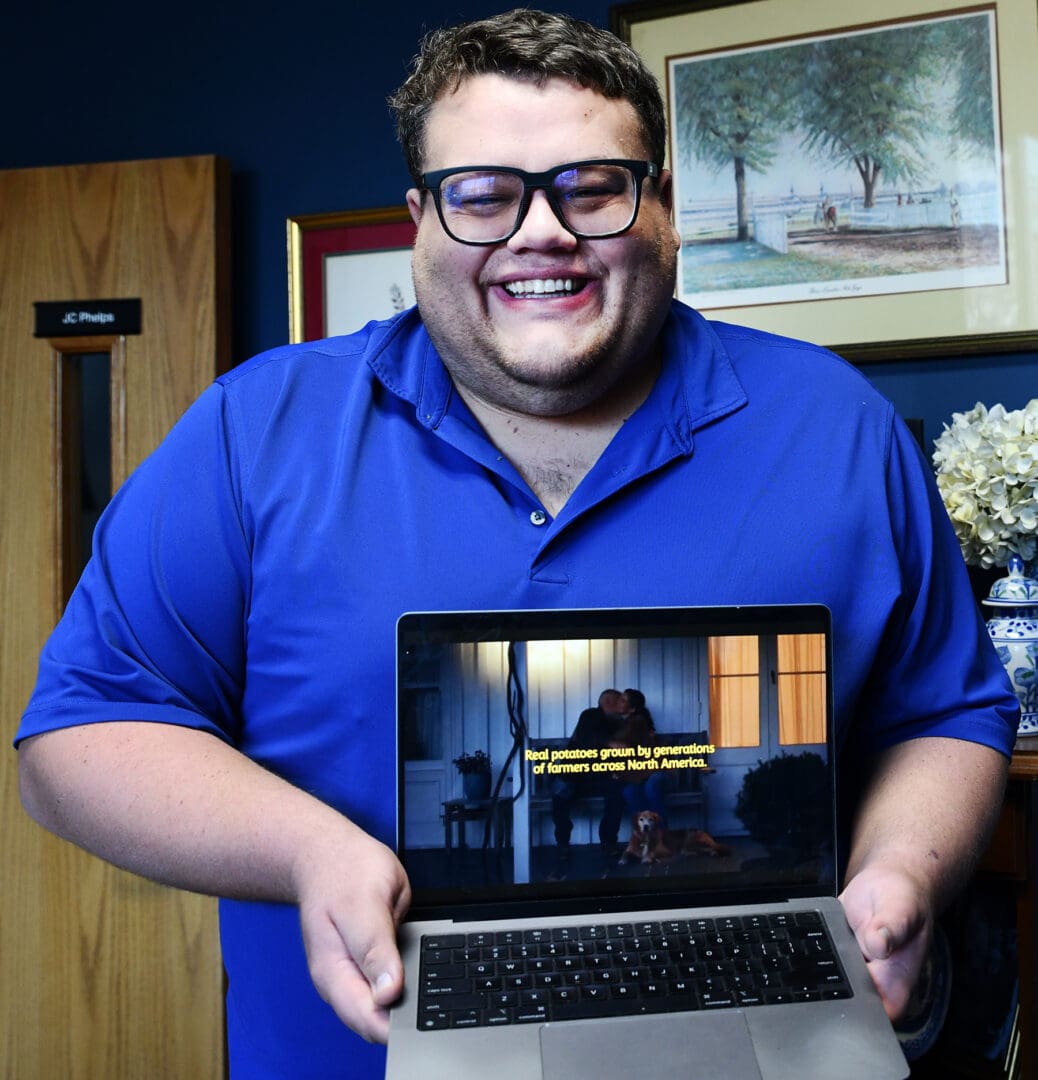
Lindsey Wilson University business professor JC Phelps rated “Last Harvest,” an ad that promoted Frito-Lay’s Lay’s potato chips, the top TV commercial that aired during Super Bowl LX on Sunday, Feb. 8.
Lindsey Wilson University is a vibrant liberal arts university in Columbia, Kentucky. Founded in 1903 and affiliated with The United Methodist Church, the mission of Lindsey Wilson is to serve the educational needs of students by providing a living-learning environment within an atmosphere of active caring and Christian concern where every student, every day, learns and grows and feels like a real human being. Lindsey Wilson offers 28 undergraduate majors, five graduate programs and a doctoral program. The university’s 29 intercollegiate varsity athletic teams have won more than 120 team and individual national championships.
(Duane Bonifer – Lindsey Wilson University)