

As we’ve reached the halfway point of the 2026 Legislative Session, I want to provide a clear update on where things stand and what Kentuckians can expect in the weeks ahead.
With over 30 legislative days complete of the required 60, the Senate has remained focused on steady, deliberate progress. At this stage of the session, nine of the Senate Majority’s 10 top-priority bills have been filed and passed the Senate. That progress reflects months of preparation during the interim and careful consideration during committee and floor debate.
It was an exciting week in Frankfort, which included a visit from Florida Governor Ron DeSantis. I had the privilege of joining and introducing him during a press conference at the Capitol Annex. He was visiting to pitch his support for a federal balanced budget amendment. In a committee, he spoke on a resolution that has been filed, which would make Kentucky the 33rd state to call for a convention of states, narrowly focused on passing a balanced budget amendment requiring the U.S. Congress to pass a balanced budget. I support that effort.
On a different constitutional amendment topic, I want to remind you that I’ve personally filed a resolution calling for congressional term limits. In light of the recent federal government shutdown, many people have contacted me with their frustrations, so I support it as well.
To begin, I want to express how grateful I was that, for the first time in my legislative career, my youngest son Carter joined me in Frankfort. Wednesday was advocacy day at the Capitol, and I was blessed to speak to advocates supporting the pediatric cancer trust fund, which was established through the first bill I ever passed as a lawmaker over a decade ago. Carter was with me in the room with brave children and advocates. I informed them I would remain dedicated to supporting funding for this cause.
For those who may not be aware, Carter was diagnosed on Oct. 16, 2007, with Stage IV neuroblastoma at 6 months of age. He underwent 12 rounds of chemotherapy and numerous surgeries. His last chemo treatment was in July 2008. Carter had liver surgery in May 2009 in Philadelphia to remove the remaining neuroblastoma. He was declared disease-free after scans in September 2009.
Carter, like many other children with cancer, has fought to overcome the obstacles cancer places in their way. He and others continue to be an inspiration to family, friends and strangers everywhere. Watching Carter play baseball, basketball and golf is a long step from his diagnosis at KOSAIR Children’s Hospital to the sports fields of Campbellsville. I consider each of those experiences a blessing. I realize our story is a positive one, but that’s not true for all families. We will continue to research ways to fight cancer.
State budget
I have heard from many of you regarding the early budget bill, House Bill 500, filed in the state House of Representatives and the budget process more broadly. I understand these discussions affect real families, and I appreciate those who have taken the time to share their concerns.
It is important to clarify where we currently stand.
The state budget traditionally originates in the House of Representatives. The early House proposal has not yet passed that chamber and remains subject to committee revisions and floor amendments before reaching the Senate. The measure remains in its earliest stages.
To be clear: no final budget decisions have been made.
When the House delivers a proposed budget to the Senate, we will carefully review the proposal, evaluate any changes and make revisions where necessary. That is the Senate’s constitutional responsibility, and we take it seriously.
Questions surrounding health insurance costs, benefit stability and long-term affordability deserve thoughtful review. Those issues require discipline, transparency and careful analysis. In fulfilling the Senate’s role in the budget process, our guiding principles remain clear. We will
maintain a structurally balanced budget, ensuring recurring revenues support recurring expenses,
exercise discipline with one-time dollars and avoid short-term budgeting approaches that create long-term instability and
make thoughtful, transparent decisions that protect both taxpayers and public employees.
There is considerable work ahead before a final budget is enacted, and I will continue keeping you informed as the process moves forward.
With that, I want to update you on several bills that passed out of the Senate this week. But first, I’m happy to inform you that the first bill of the legislative session to be signed by the governor is Senate Bill (SB) 172. It provides an additional tool to the Kentucky Public Service Commission to address energy affordability challenges. Under the bill, upon a utility company’s request, the PSC could prevent sudden spikes in utility bills due to fuel surcharges by spreading the costs over time. I’m happy to see this bipartisan measure become law.
Bills passed by the Senate
I was proud to co-sponsor SB 104, also known as the HALO Act. The proposal establishes a 25-foot safety zone around first responders while they are lawfully performing their official duties. After a verbal warning, the bill makes it a crime to knowingly approach or remain within the zone with the intent to interfere with official duties, threaten physical harm or harass a first responder. The legislation establishes escalating penalties: a first offense is a Class B misdemeanor, a second or third offense is a Class A misdemeanor, and subsequent offenses are Class D felonies. The HALO Act applies to peace officers, firefighters, emergency medical and rescue personnel, probation and parole officers, and university and airport police, including non-profit responders. The bill is designed to reduce risks in high-stress situations while preserving lawful public activity, including constitutionally protected speech and the right to record.
Additional bills were approved and delivered to the state House of Representatives
SB 39 clarifies that a private property owner has the right to use their property for fishing without a license. This follows a recent attorney general opinion that reached the same conclusion.
SB 69 was modeled after my 2015 bill that created the pediatric cancer trust fund. This bill establishes an autism spectrum disorder trust fund and allows taxpayers to voluntarily contribute a portion of their state income tax refund to support autism research, services and workforce development. This effort will help strengthen resources for individuals and families across the autism spectrum and expand access to meaningful support statewide.
SB 80 proposes a constitutional amendment to restore voting rights to individuals convicted of certain non-violent felonies after they have completed their full sentence. The measure maintains strict exclusions for serious offenses and would allow Kentucky voters to decide the issue through a future statewide ballot.
SB 152 strengthens school leadership and accountability by clarifying that principals have final decision-making authority while maintaining structured input from teachers and parents through advisory councils. The goal is to support strong, effective leadership that helps schools better serve students and families.
SB 154 strengthens Kentucky’s voter ID law by updating the list of documents that may be used to verify identity when casting a ballot. The measure focuses on ensuring secure and reliable identification while maintaining confidence in the election process. Voter ID is an issue that enjoys over 80 percent support nationwide and 70 percent among registered Democrats, yet the Senate Minority Caucus opposed this bill. This is a common sense step to take in regard to strengthening confidence in Kentucky’s elections.
Each of these bills, along with several others available on the legislative website, now advances to the House for further consideration.
As we enter the second half of the session, our focus remains on steady progress and responsible governance. Legislative deadlines are approaching, committees continue to meet daily and collaboration between chambers will intensify.
Your engagement in this process matters. Good-faith communication strengthens public policy, and I encourage you to continue sharing your thoughts as the legislation advances.
In closing, I want to say that on Thursday, the Senate welcomed military families from across the commonwealth for our annual Military Kids Day at the Capitol. This special event honors the children and grandchildren of those who serve or have served in the United States Armed Forces. While we rightly recognize the men and women in uniform, it is important to acknowledge that their children serve alongside them in their own way. Military kids endure long deployments, frequent moves, new schools and time away from parents who answer the call to protect our freedoms. Their sacrifices are real and deeply felt. It was an honor to recognize their resilience and thank their families for the shared sacrifice that strengthens both our state and our nation.
You may reach my office with comments or questions by calling 502-564-8100 or emailing Max.Wise@kylegislature.gov.
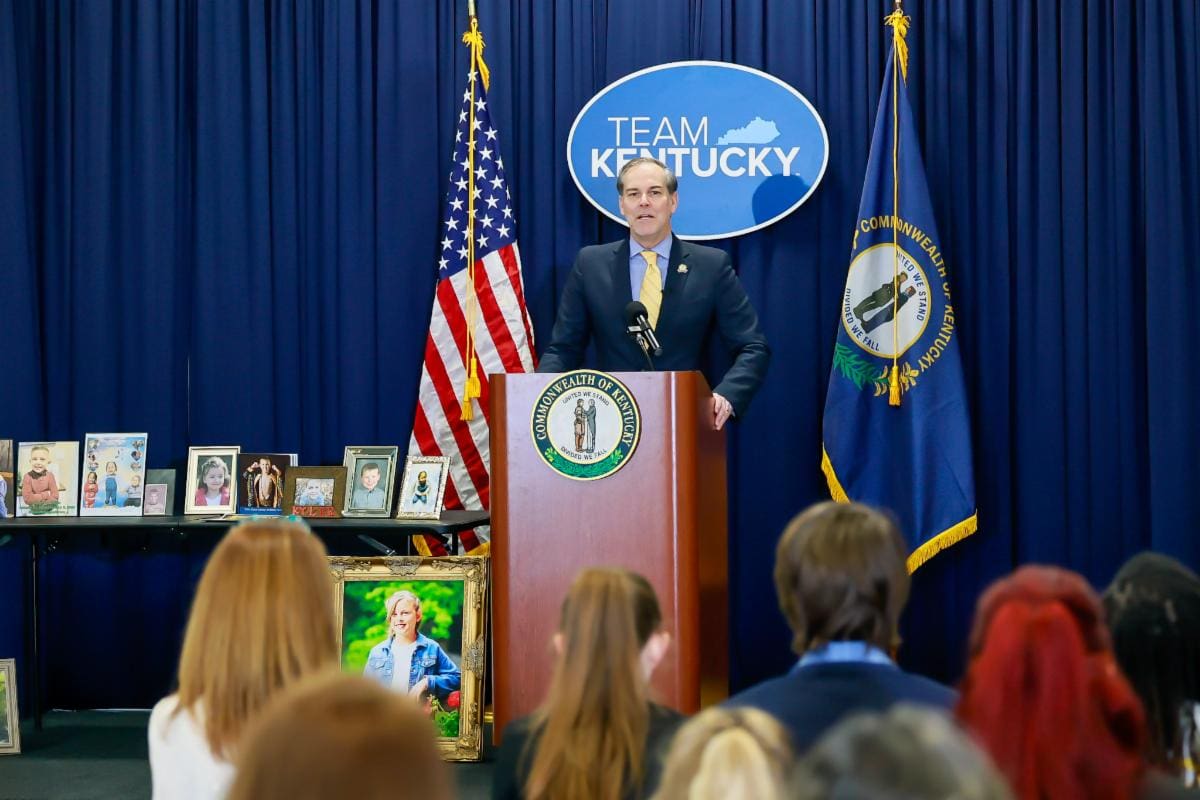
PHOTO: Senate Majority Floor Leader Max Wise delivers remarks to a crowd of families during Advocacy Day at the state Capitol. Feb. 18, 2026. Photo Credit: Dave Ater, Videographer, Public Information Office, Legislative Research Commission.
# # #
Sen. Max Wise, R-Campbellsville, represents the 16th Senate District, including Adair, Allen, Metcalfe, Monroe, and Taylor Counties and eastern Warren County. Wise serves as Senate majority floor leader. He is a member of the Senate Committees on Education, and Economic Development, Tourism, and Labor. As part of Senate leadership, Wise also serves on the Legislative Research Commission, the Rules Committee, and the Committee on Committees.
(Dustin R. Isaacs – Office of Senate Majority Floor Leader Max Wise)